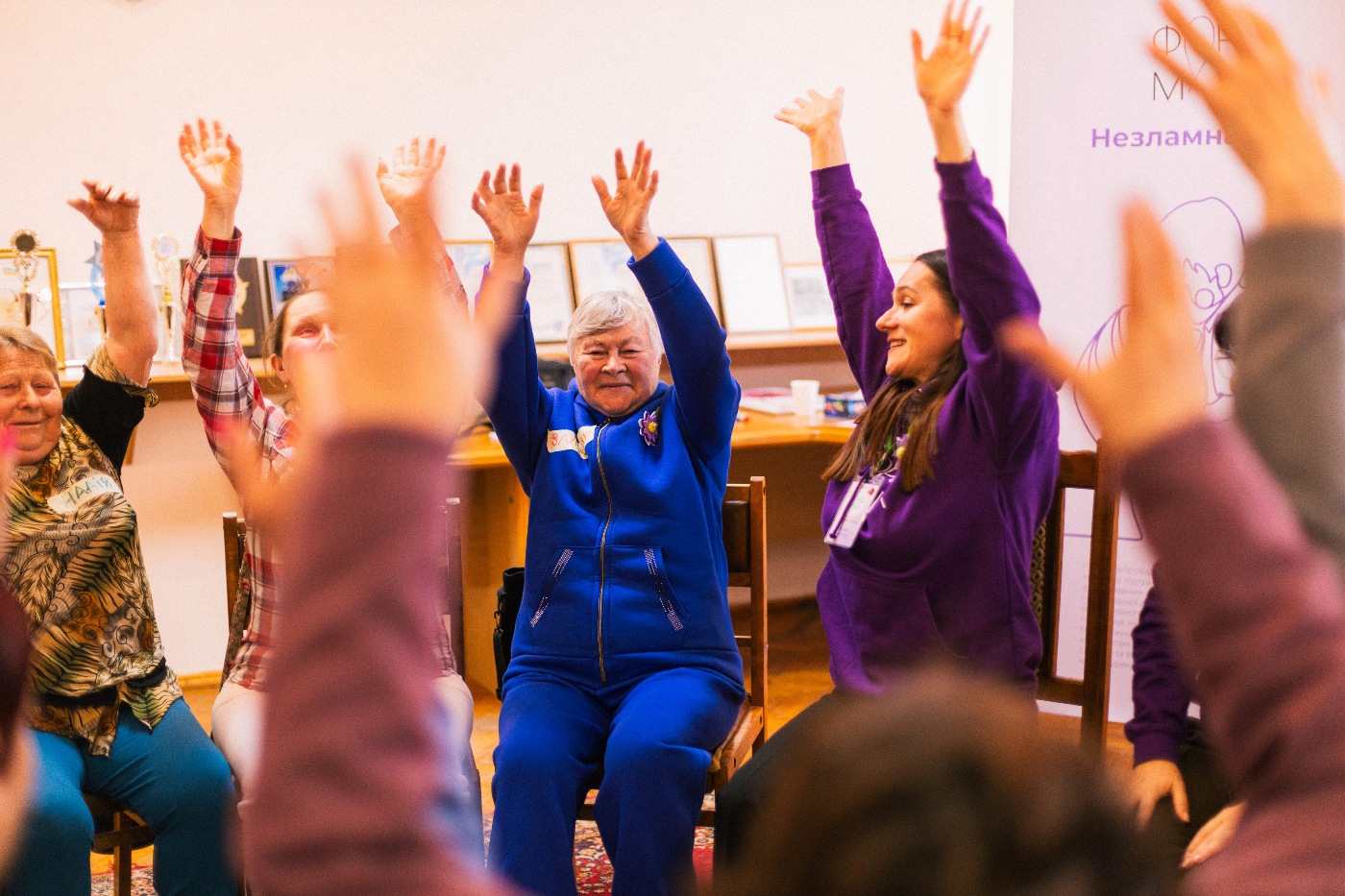
The training covered the psychological, legal, and social aspects of working with victims and their loved ones and relatives. Participants reviewed practical cases and received tools to work more effectively in this area. The training was conducted by the Chair of the Council of the Blue Bird NGO, Master of Psychology Anna Mokrousova, who shared with the participants not only theoretical knowledge, but also her own practical skills and abilities.
“For us, as an organization that primarily works with women who are waiting for their husbands or sons to return from captivity or living in situations of uncertain loss, understanding the legislative framework has become very important. We need to know where and how we can help our beneficiaries—where to find information and how to access qualified assistance. For example, a released person or their family, once their status is confirmed, is entitled to a one-time payment of 100,000 hryvnias, plus 100,000 for each year of captivity. It is important that a family can apply for payment even if the person has not yet been released. In addition, the state provides medical examinations and psychological and emotional support immediately after release. Separate support is provided for civilians,” said Tetiana Muratkina, head of the Masha Foundation.
Captivity itself is a deeply traumatic experience that creates a whole range of consequences. In the Ukrainian context, this is a particularly acute problem: Detention is almost always accompanied by ill-treatment and torture by occupiers who do not comply with international humanitarian law.
People who have returned from captivity may experience serious physical and mental overload in the first months after release: problems with concentration and orientation in time and space, increased irritability, reluctance to communicate even with their loved ones, and difficulties with making even simple decisions. If these conditions last for more than three months and affect the quality of life, professional psychological support is necessary. The symptoms that require immediate medical attention are depression, anxiety disorders, emotional instability, sleep disorders, post-traumatic stress disorder, social isolation, and suicidal thoughts.
“Today, working with people released from captivity requires special caution, in-depth knowledge, and special training. These are people who have gone through extremely traumatic experiences, and this experience affects their psycho-emotional state, behavior, and interaction with their environment. When there is no understanding of these processes, people often do not know how to behave properly, what to say, or what to avoid, and they do not understand a person’s state after captivity. This leads to communication errors that do not support, but rather add additional burden to an already traumatized psyche. That is why training in this area is extremely important. It provides an understanding of what is happening to a person, helps to see their reactions as natural consequences of what they have experienced, rather than as something wrong, and allows them to build more caring, safe, and supportive interactions. In this way, we not only increase our professional competence, but also really reduce the level of additional stress around a person and create conditions for their smoother recovery,” shared Olha Koptieva, psychologist, methodologist of the Unbreakable Mom project of the Masha Foundation.
The situation for families is no less difficult: expectations, uncertainty, and after release, the need to rebuild relationships with a person who has gone through a difficult, traumatic experience. Therefore, training specialists capable of providing qualified assistance to both is urgently needed.
“We already have experience working with women and children who have experienced deeply traumatic events. That is why understanding the specifics of interacting with people who have been captured and tortured helps us act more professionally, sensitively, and safely—not to re-traumatize, but, on the contrary, to create a space of trust, recovery, and internal support,” said Valentyna Bilmach, manager of the Unbreakable Mom project at the Masha Foundation.
According to her, the training was valuable not only in terms of working with the trainees, but also for supporting the team:
“For me as a manager, it was important to understand more deeply how to support specialists working with such complex stories, to help them maintain resourcefulness and professional resilience.”
Valentina added that such knowledge directly affects the quality of care. This directly affects the support our clients receive. Therefore, this training was truly very valuable and practical for her.
Today, Blue Bird is one of the most expert organizations in Ukraine specializing in this topic. Their work is built not only on a theoretical basis, but also on many years of practical experience: They work directly with those released from captivity and the families of those still in captivity, interact with authorities, and participate in improving legislation for survivors of torture and sexual violence.