Over the four years of the Unbreakable Mom project, the program’s psychologists have helped thousands of women and children regain their self-esteem and find meaning in life after terrible losses. However, while most often Ukrainian women who have lost partners, mothers of young children or teenagers come to the project’s shifts, this spring the Unbreakable Mom organized a camp specifically for mothers of fallen soldiers. For years, these mothers have been in survival mode, where there was no room for tears, weakness, or their own pain. Each one understood exactly why she came to Unbreakable Mom and actively participated in the work. This was one of the most emotional and, at the same time, greatest changes in the project’s entire existence.
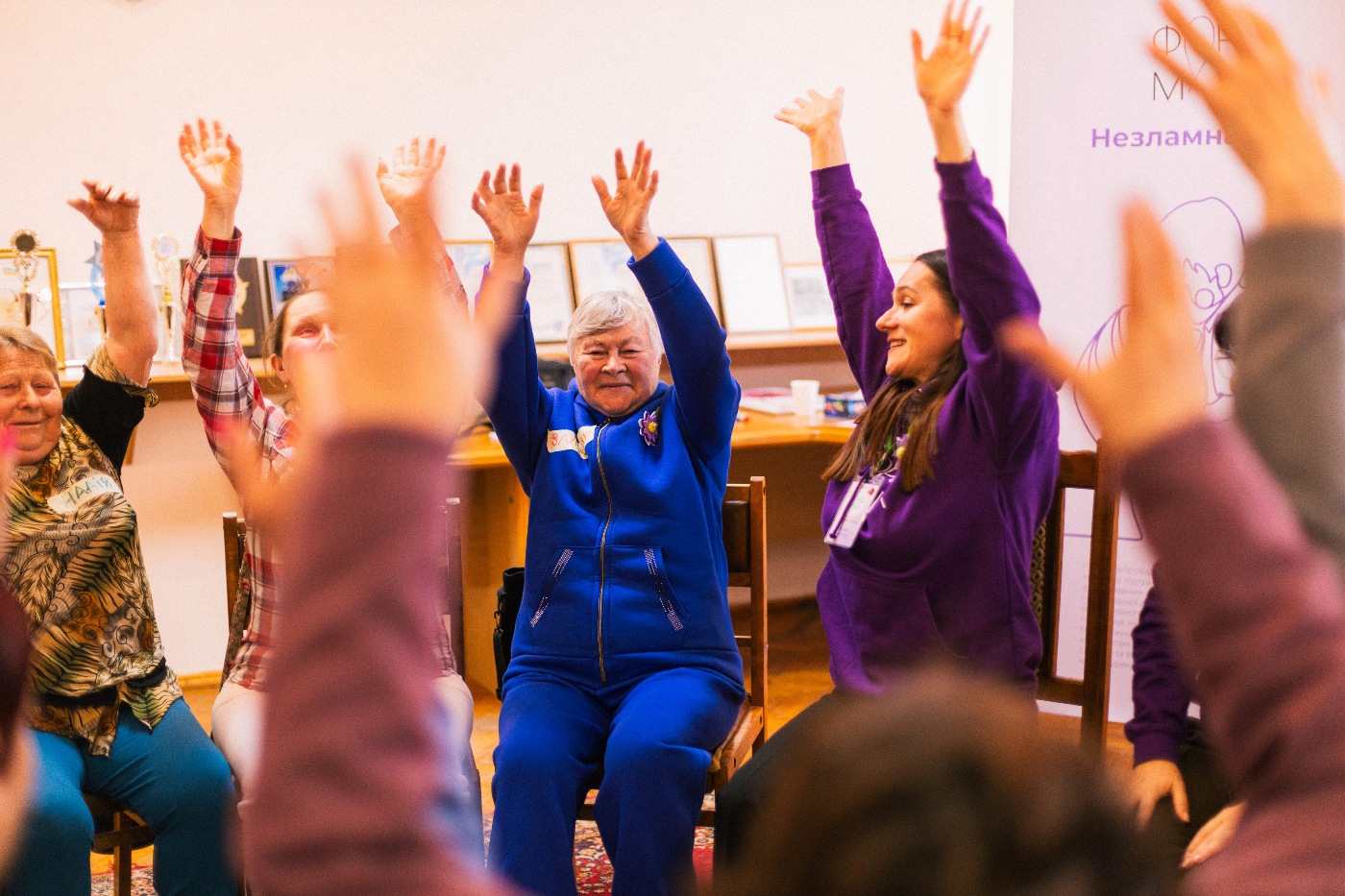
“The results of the changes showed us a very strong response and a huge need for such support. Women worked very actively on the program: attended classes, asked for more time for individual consultations with psychologists, and almost all participants came to the morning exercise every day, despite the fact that their age is from 47 to 65 years old,” says Valentyna Bilmach, manager of the Unbreakable Mom program.
But the most valuable thing about this shift is not the numbers, but the return of women to life, which happened right before the team’s eyes. One of the participants, a professional singer, had not sung for three years after her son went missing because her voice was shaking. At the closing of the program, she sang a cappella for the first time in a long time. Another woman, an artist, after the death of her son, could not pick up a brush for more than two years, but on the program, she began to paint again.
“Another woman came with a very unusual request, “I want to cry. I haven’t cried for three years after my son died.”” And it was on the program that she was able to do it! Then in the conversation, she told me, “These tears are not only my pain, but also the joy of being able to afford it here,” says Valentyna Bilmach. “There was also a participant who came with joint problems and constantly walked with a cane. She attended all the dance practices, and at the end of the shift, she danced with everyone and even went to the hat show, which the participants prepared, without a wand.”
Experts explain, “working with mothers of fallen or missing servicemen has its own specifics. Often, these women live for years in a state of constant internal tension, where the body literally ceases to feel safe. Therefore, simple repetitive actions that provide a sense of rhythm and control become especially important for older women: walking, knitting, movement, breathing exercises, and contact with nature. All this helps the nervous system gradually emerge from a state of constant anxiety.”
“When we feel the floor with our feet, notice how our body touches the chair, how our back has support—we seem to return ourselves to a moment where we can at least breathe a little. It is through such simple things that the resources to live day by day and endure the experience that is now there gradually appear,” explains Olha Koptieva, methodologist of the Unbreakable Mom project.
Another important indicator for the team was the mothers’ own trust. Among the participants were wives of soldiers from the 93rd Brigade, and before the end of the shift, 12 new mothers registered for the program based on their recommendations. And this is the most important confirmation of the Unbreakable Mom program’s effectiveness.
About the project:
The Unbreakable Mom rehabilitation program is specially designed by specialists in psychology and post-traumatic disorders for women and their children affected by war. This is an online and offline camp where psychologists, physical therapists, and art therapists work with project participants. According to a study by the Healthy Mind AI-platform (the study was conducted among participants of the 75th shift of the project), participation in the program reduces anxiety levels by 83%, depression levels by 78.67%, and 90% of participants with the most severe manifestations of PTSD experienced significant relief.