On the outside, Ukrainian women are unbreakable rocks. Even in the worst of times, we smile at work, entertain our children with a lump in our throat, and, with our heads held high, show the enemy that we cannot be broken. But inside, hurricanes of emotion may be raging—or, on the contrary, there may be a desert burned out by pain. Psychologists at the Masha Foundation note that if, at the beginning of the full-scale invasion, shock and acute fear dominated women’s emotional states, today the conversation is increasingly about living in a state of constant tension, where emotional exhaustion becomes the new normal. Women continue to work, care for their families, and support others—but at what cost?
“We do not know everything about the woman standing next to us. Sometimes you may be talking to a friend or colleague and have no idea that she is, in fact, in deep depression or is a survivor of violence. Depression and apathy have no social status; they do not care about a bank account or public visibility. Our research shows that 85% of Ukrainian women are in a state outside the norm of mental health, but working with psychologists at the Nezlamna Center improves this state by 53%. That is why I want every woman who feels lonely, who is experiencing loss, or who can no longer taste life to know: there is a place where things can become easier, where she will be cared for and provided with help so she feels that she is not alone. And that place is our Nezlamna Mental Recovery Center,” says Masha Efrosinina, co-founder of the NGO Masha Foundation.
As psychologists at the Masha Foundation note, the mobilization of the first months has given way to exhaustion, which is not always immediately recognized. Specialists also draw attention to the tendency to ignore one’s own condition: many women become accustomed to postponing self-care, focusing instead on daily tasks and the needs of others. At the same time, this very strategy often deepens exhaustion and makes it harder to return to emotional balance.
“In the first months of the full-scale invasion, women sought help simply to hold on, cope with panic, calm themselves and their children, and find at least some sense of safety. Later, when the acute phase had passed, exhaustion and the difficult adaptation to a new reality came to the forefront: life in displacement, separation, and constant anxiety. The need grew not only for one-time assistance but also for regular support, communities, and the opportunity to talk about one’s experience,” says Tetiana Muratkina, director of the Masha Foundation. “In the following years of the war, the requests became deeper and more difficult: coping with loss, working through traumatic experiences, symptoms of PTSD, and a state of chronic stress. Many women no longer need short-term support but long-term and systemic help.”
The Masha Foundation emphasizes that the nature of requests for help has also changed. Whereas earlier they involved acute states, today women more often come with a sense of constant fatigue, loss of meaning, and difficulty recovering even after rest. This points to the accumulated effect of prolonged emotional exhaustion, which affects all areas of life.
Today, more and more women are looking for support, new meaning, and ways to regain control over their lives, restore social connections, return to professional realization, and rebuild inner resilience. The main change, perhaps, lies in the very wording of the request: from the need to “endure and not break” to the desire to “keep living and restore myself.”
“With every week of the war, there are more and more women experiencing losses: the loss of a home, the loss of loved ones. There is also an ambiguous loss when a woman experiences an endless swing between hope and despair. Among the women who come to us for help, more than 40% are partners of service members, and about 25% have experienced losses, including ambiguous ones. Some of these women became mothers during the war and are raising children on their own. Another important category is female veterans and active-duty servicewomen. In addition, we have a number of cases in which we support women released from captivity,” emphasizes Olena Zapolska, methodologist at the Nezlamna Mental Recovery Center.
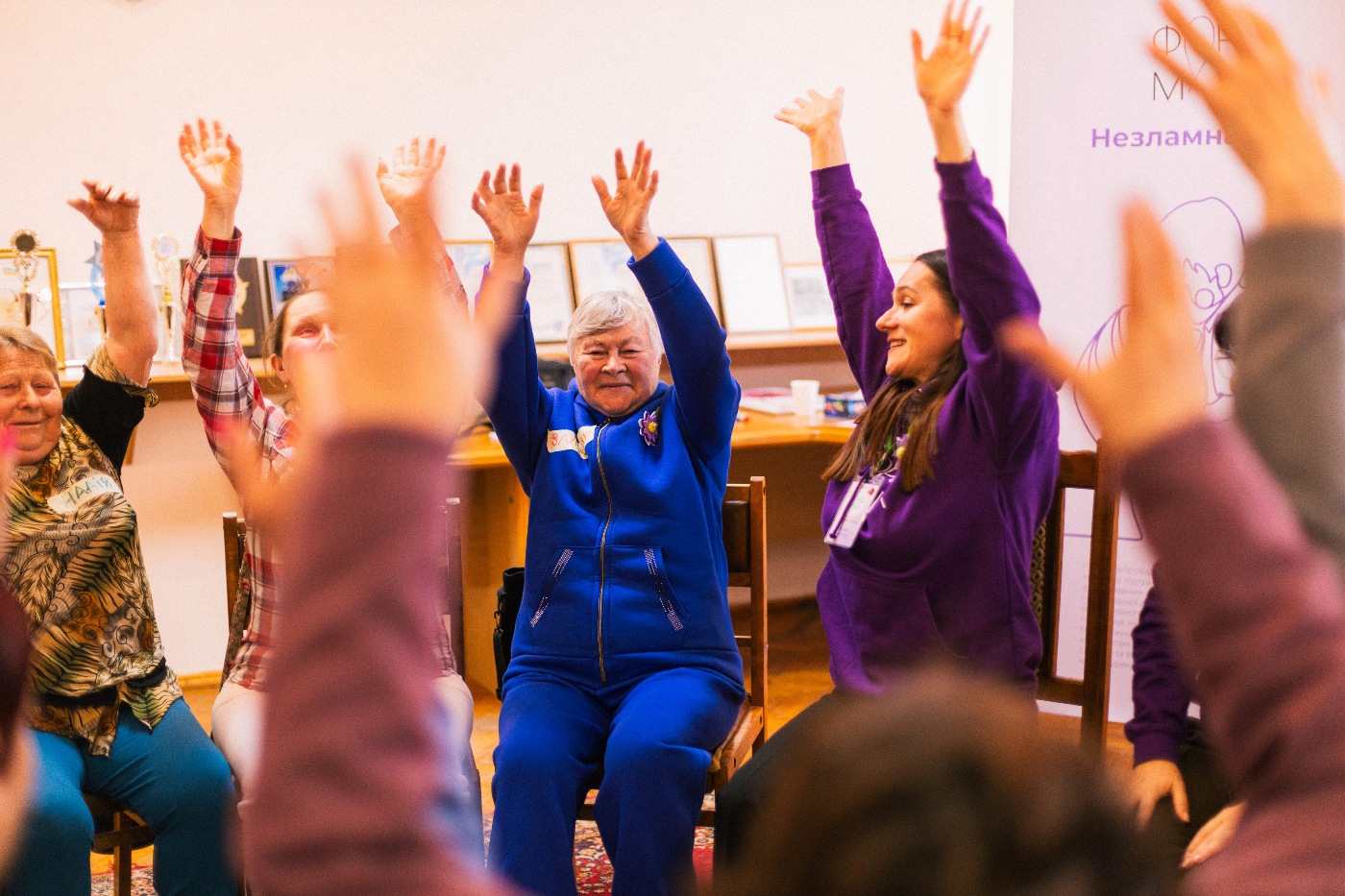
Over the past four years, tens of thousands of women have passed through the caring hands of the Masha Foundation’s psychologists. The task of the NGO Masha Foundation is not only to provide assistance but also to gradually reduce the stigma surrounding psychological support, demonstrating that turning to a specialist is not a sign of weakness but a necessity and a responsibility for one’s own condition. So if you feel that you are not coping, notice yourself lashing out at loved ones, or experience prolonged sadness, fatigue, or a loss of inner resources, please seek help from the Nezlamna Mental Recovery Center by the NGO Masha Foundation. To receive support, message any messenger at +380951470209 or fill out the form at the link: https://forms.gle/3BcLFQXwAu2dJjKr8