Small rituals can become great supports, helping us keep our balance and feel stronger even in the most difficult times. Olha Koptieva, a methodologist of the Unbreakable Mom psycho-emotional stabilization program, talks about how daily practices work and why they help our psyche withstand stress.
To understand how to use small steps to resist stress and find resources, it’s worth talking about resilience—the ability of our psyche to remain stable in stressful conditions, overcome them, and return to normal life. This quality is also called the “elasticity” of the psyche, because it allows us not to break, but to bend, adapt, and move on. And the good news is that anyone can learn this.
“Resilience is not an innate superpower, but a skill that can be developed,” explains Olha Koptieva, the methodologist of Unbreakable Mom psycho-emotional stabilization program. “One way to train resilience is through daily regulation practices. They help a person recover faster from stress and feel more stable.
Psychologists distinguish four main types of such practices: self-regulation, co-regulation, eco-regulation, and theo-regulation. Each of them affects our lives in its own way and can become an additional resource.
Self-regulation: our own resources
Self-regulation is a set of techniques with which we can help ourselves. It can be breathing, movements, meditation, muscle relaxation, or even simple rituals.
“Everyone has their own,” explains Olga Koptyeva, a methodologist at the Masha Foundation program. “Someone relaxes when they knit or embroider. For some, a resource is a walk, for others, a cup of coffee, a hot bath with candles and music, watching TV series, or even a trip to the hairdresser or beautician. The main thing is that it be yours, something that returns a sense of stability to you.”
When stressed, we act not at the level of knowledge, but at the level of habits. That is why it is worth creating your own “piggy bank” of self-help techniques so that taking care of yourself is not an accident, but a conscious strategy.
Co-regulation: the power of unity
No person can live in isolation. We are created to be there for each other, overcome challenges together, and support each other. It is in the community that we can find additional strength. Co-regulation is about the power of friendship.
“Ukrainian women, waiting for their men to return from the war, often gathered together,” the psychologist gives an example. “They embroidered, sang, cried. And every action had meaning: Meetings helped to feel that you were not alone in our experiences; embroidery was calming because of fine motor skills; singing balanced the nervous system because it involved deep breathing; and tears gave a natural outlet for emotions.”
Co-regulation is about communication. When we interact with others every day, say simple, warm words, share everyday moments, but don’t get stuck on traumatic topics—this helps us to switch and live through difficult periods more easily. But be careful: People around you can be a source of strength, or vice versa. Therefore, it is very important to consciously choose your environment.
Co-regulation practices:
Eco-regulation: contact with nature
We think you’ve noticed that any interaction with nature or animals has a therapeutic effect.
“In Japan, there is a practice of “forest bathing” that proves: “Even a walk in the forest reduces stress levels and strengthens the immune system,” explains Olha Kopteva. However, in reality, eco-regulation is available to everyone, every day. It’s enough to water a flowerpot, walk through a park, observe a tree by the window, touch the ground in the garden, or simply pet an animal.
Scientific studies confirm: interaction with nature and animals reduces cortisol levels, normalizes blood pressure, and provides a sense of security and social support.
Eco-regulation practices:
Theo-regulation: faith and values
Theo-regulation is not just about religious practices. This is the entire system of values and beliefs that we form throughout our lives.
“What we tell ourselves every day has a tremendous impact,” the psychologist emphasizes. “It can support us or, conversely, worsen our condition. Do we treat ourselves as kindly as we treat our children or loved ones? This is also about theo-regulation.
This could be prayer, meditation, a gratitude practice, or a few minutes of silence. Thank the day, yourself for your endurance, the Armed Forces of Ukraine for protecting us, or even your own cells for “working” for you. All this becomes a source of inner strength.
Theo-regulation practices:
It only takes a few minutes a day to combine all four regulations: Take a walk or apply cream to your face, say a kind word to someone on your way to work, take a walk in the park, pet the cat, and end the day with gratitude or a short prayer.
These simple actions take little time but have a huge effect. They help not only to recover, but also to achieve post-traumatic growth—when we do not simply return to “the way it was”, but become stronger, more flexible, and deeper.
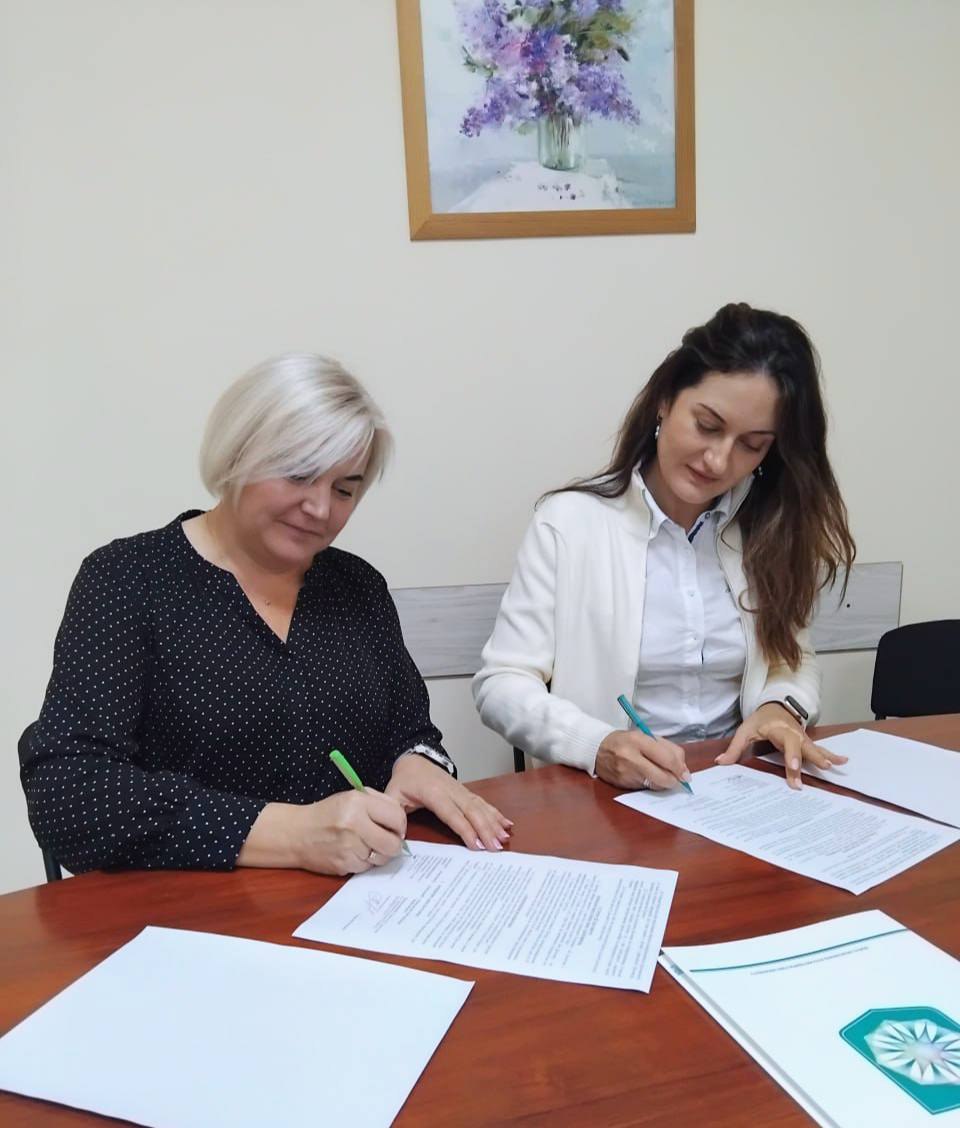
We at the Masha Foundation also practice gratitude. Therefore, we would like to thank our constant partners— COSIBELLA Company for the continued support of the Foundation’s projects, in particular, the program for the Unbreakable Mom psycho-emotional stabilization of women and their children. Together we revive women for the sake of the revival of Ukraine!
About the project:
The Unbreakable Mom rehabilitation program is specially designed by specialists in psychology and post-traumatic disorders for women and their children affected by war. This is an online and offline camp where psychologists, physical therapists, and art therapists work with project participants. According to a study by the Healthy Mind diagnostic platform (the study was conducted among participants of the 75th intake of the project), participation in the program reduces anxiety levels by 83%, depression levels by 78.67%, and 90% of participants with the most severe manifestations of PTSD experienced significant relief.